Substack Notes written to win subscribers, not likes.
Point it at your latest essay. It pulls three Notes out of it, one to reach strangers, one to teach, and one to take a stand, each in a shape built to send readers to your profile.
Built by Atharva Shah. Substack Notes costs $19, paid once. Buy Substack Notes. The skill folder and setup guide arrive by email.
Substack Notes at a glance
Substack Notes is an AI agent skill for Claude Code, Codex CLI, Gemini CLI, and other agents that read SKILL.md. Short Notes written to bring new subscribers, not just likes from existing ones. Best for: Substack Notes strategy.
- Works with
- Claude Code, Codex CLI, Gemini CLI, Cursor, GitHub Copilot
- Category
- Everyday social
- Price
- $19, one payment
- Requirements
- Needs a paid Claude plan with skills, in the Claude app or Claude Code. It writes Notes. You post them on Substack yourself.
- Included
- Four short Note patterns, Ranked hook library, Growth playbook for comments, Voice file template
What Substack Notes produces
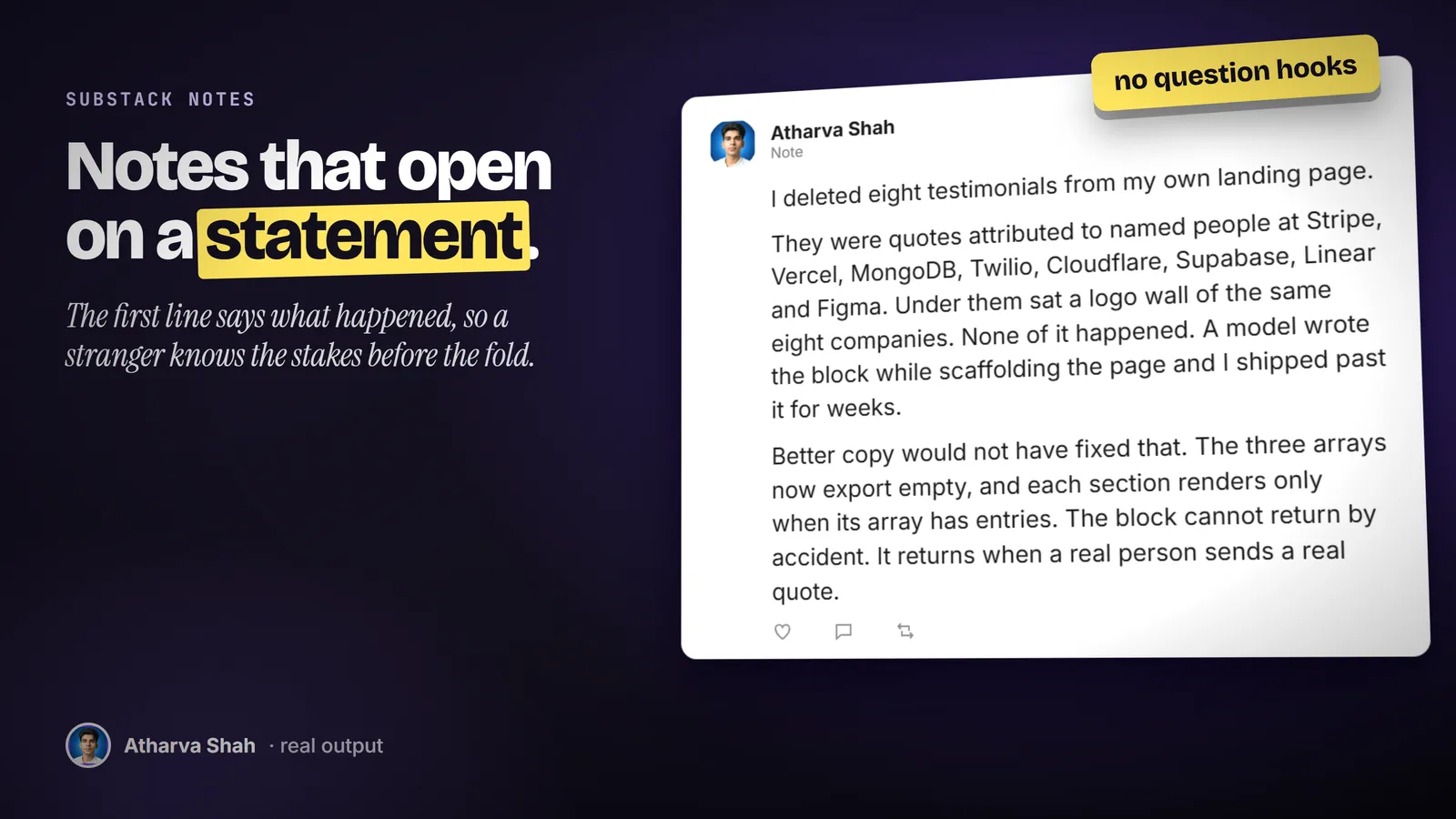
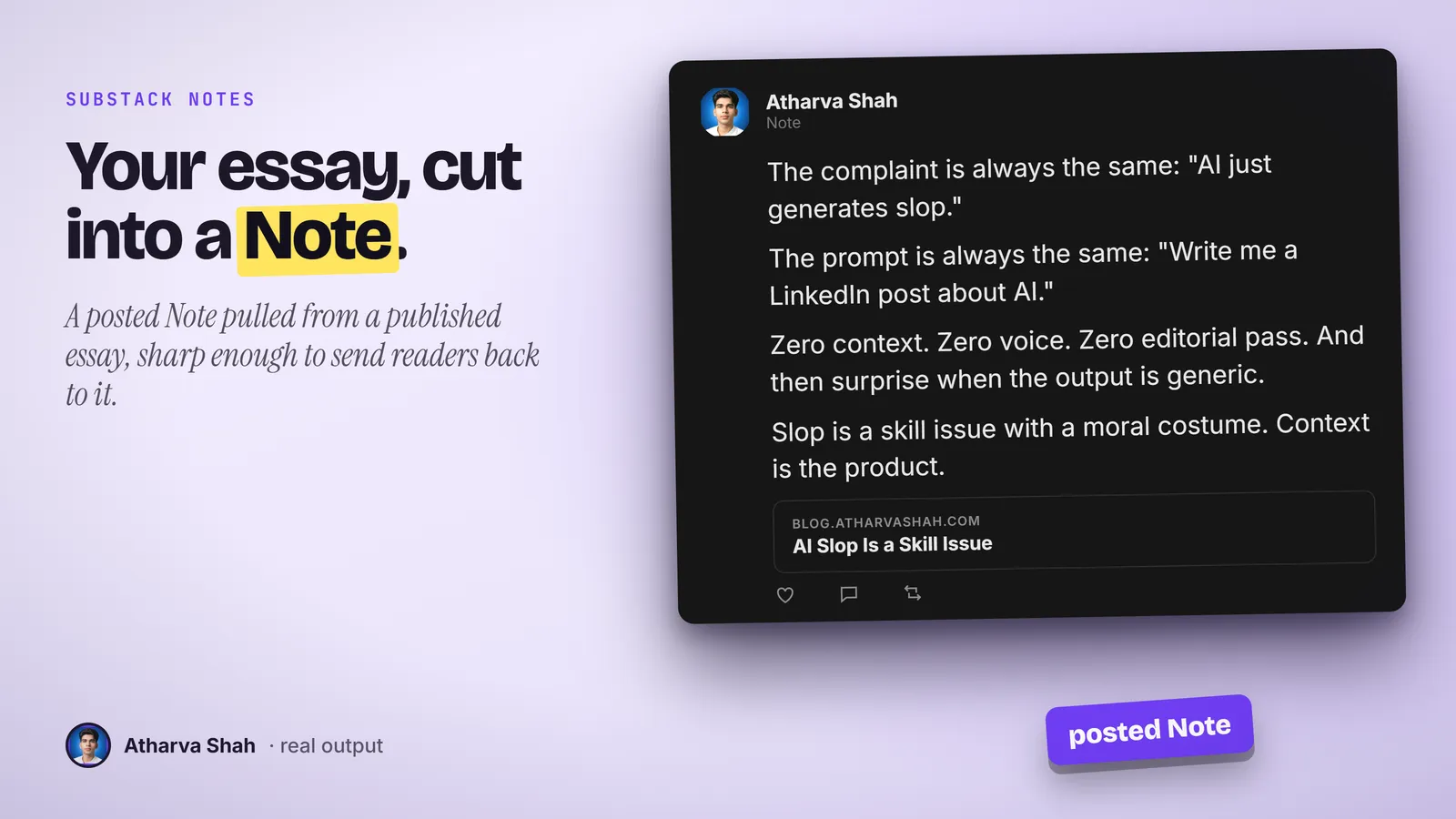
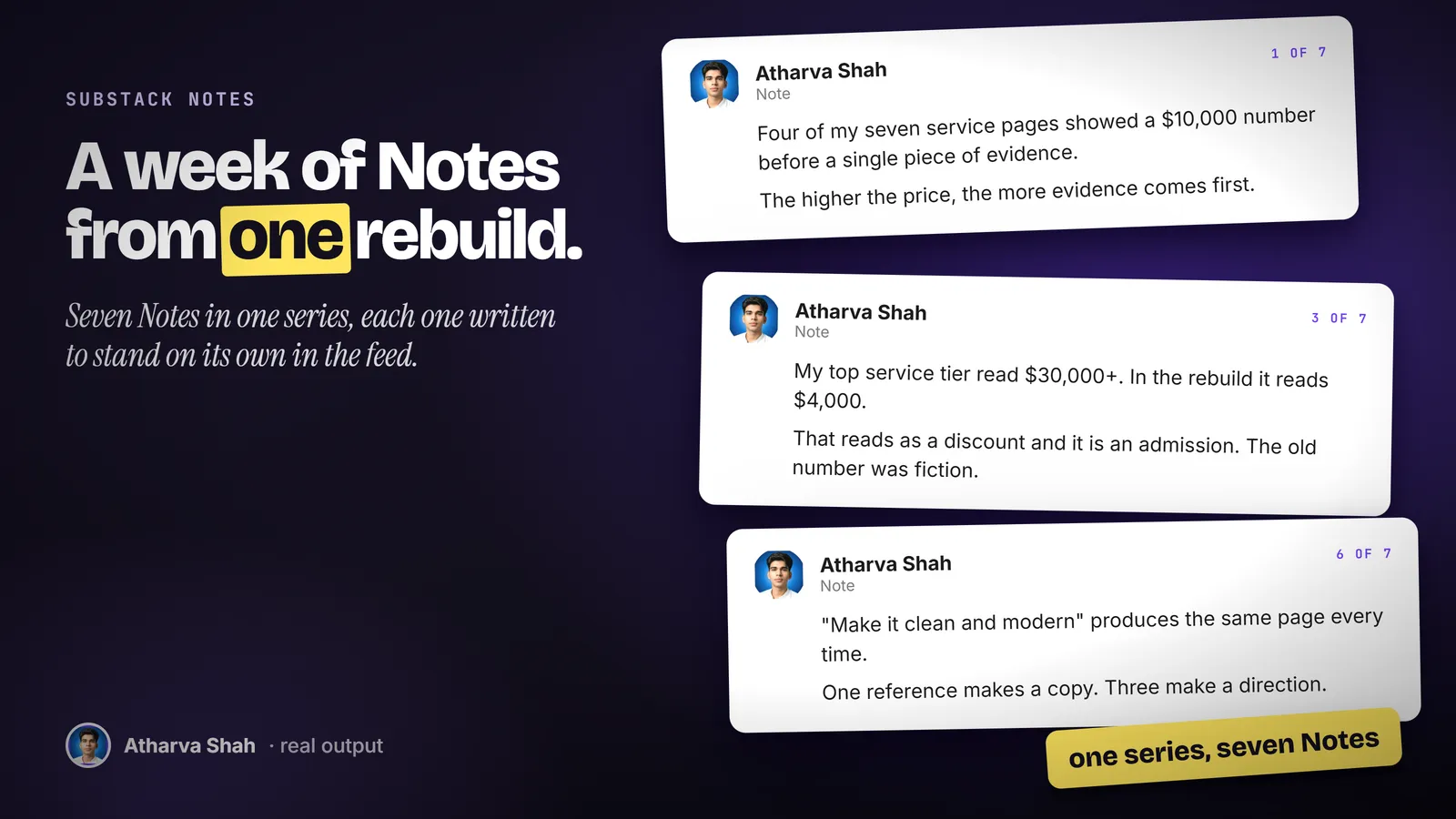
Your essay already holds a week of Notes.
Set up your voice once. Then each essay feeds three steps.
- Hand it the essay. It never writes a Note from a blank screen. The opening story, the core rule, and the frustration that made you write are three Notes already.
- It picks the purpose and the pattern. Each Note gets a purpose, reach, teach, or take a stand, then one of four short patterns known to pull readers into your profile.
- Post through the week. You get each Note with a short statement hook and no hashtags, sized for the feed. Post one a day between essays.
Most Notes chase likes from your own readers.
A like from a subscriber you already have grows nothing. A Note has to reach a stranger and give them a reason to follow.
Substack Notes
- Statement hooks. Every Note opens on a claim, a number, or who you are.
- Three purposes. Reach, teach, and take a stand, from one essay.
- Four proven patterns. Short shapes that send readers to your profile.
- A growth playbook too. How to comment and recommend without looking like spam.
Generic AI writers
- Questions as hooks. "Have you ever wondered" is the weakest opener on the platform.
- The essay, shortened. A Note that restates the essay gives nobody a reason to click.
- Growth-hack templates. Readers spot the copied wording in one line.
- Hashtags and bait. "Agree or disagree?" at the end of every Note.
Posting by feel
- Blank box every day. The Note you meant to post never gets written.
- Long when short wins. The Note turns into a mini essay and converts worse.
- Only your safe takes. The Notes that would repel casual readers never ship.
- No reuse. Your best Note from three months ago stays buried.
Every Note carries your raw thought, not a template.
The patterns set the pacing only. The words come from your essay and your voice file, so readers hear you and never a growth playbook. Conviction Notes are allowed to underperform on likes, and it will not soften them to chase a bigger number.
Questions about Substack Notes
How do I grow on Substack Notes?
Post Notes that stand alone and point at one specific post. This skill writes them that way and varies the format so a week of Notes never repeats.
How many times should you post Notes on Substack?
One to three Notes a day is common among growing writers. The skill writes in batches so you can keep that pace.
Which Claude plan do I need?
Any paid plan that runs skills. Pro is enough.
What else do I pay for?
Nothing. It does not connect to your Substack account or post for you.
Do I need an essay to start?
It works best from one. It can also work from notes or a draft, but it will not invent a take from nothing.
How long is each Note?
Most land between 70 and 110 words. Very short Notes use one of the four short patterns, and longer ones are kept for small stories.
Why no question hooks?
Notes that open on a statement bring in more subscribers than Notes that open on a question. So every hook is a claim, a number, or an identity line.
Will it reuse my old Notes?
Yes. It restates a strong idea in new words weeks later and suggests reposting a proven Note after three months, when new subscribers have not seen it.
Does it help with growth beyond writing?
It includes a short playbook on commenting on other writers’ posts and on recommendations, with the habits that get an account ignored.
Does it work for a paid newsletter?
Yes. Notes do the discovery. Your essays and your paid posts do the converting.
What if a Note sounds generic?
Tell it which line you would never say. It rewrites from the essay again and adds the rule to your voice file.
Does this skill work with Gemini CLI, Codex, Cursor, or GitHub Copilot?
Yes, with one caveat. The skill is a SKILL.md folder in the Agent Skills open standard, which Claude Code, Codex CLI, Gemini CLI, Cursor, and GitHub Copilot all load. It is built and tested on Claude Code. Steps that lean on Claude-only features, such as parallel subagents, run one after another or need a manual step in other agents.
How do I install an agent skill?
Copy the skill folder into your agent's skills directory: ~/.claude/skills for Claude Code, or the skills folder your agent documents for Codex CLI, Gemini CLI, Cursor, or Copilot. The agent reads the description and loads the skill when your request matches it. Each skill ships with a setup guide for any tool it needs.
Related skills
- LinkedIn Posts: Posts in your voice that pick a proven format before they write a single line.
- LinkedIn Carousels: Swipeable carousels with every slide exported as a PNG from one brief.
- X Posts: Standalone X posts with your take in the first six words, scored before you see them.
- Reel Scripts: Sixty-second scripts with the overlay text, the caption, and the pinned comment.